

LTX-2.3-Dearchive-Lora Turns Vintage Grain Into Sharp Modern Video
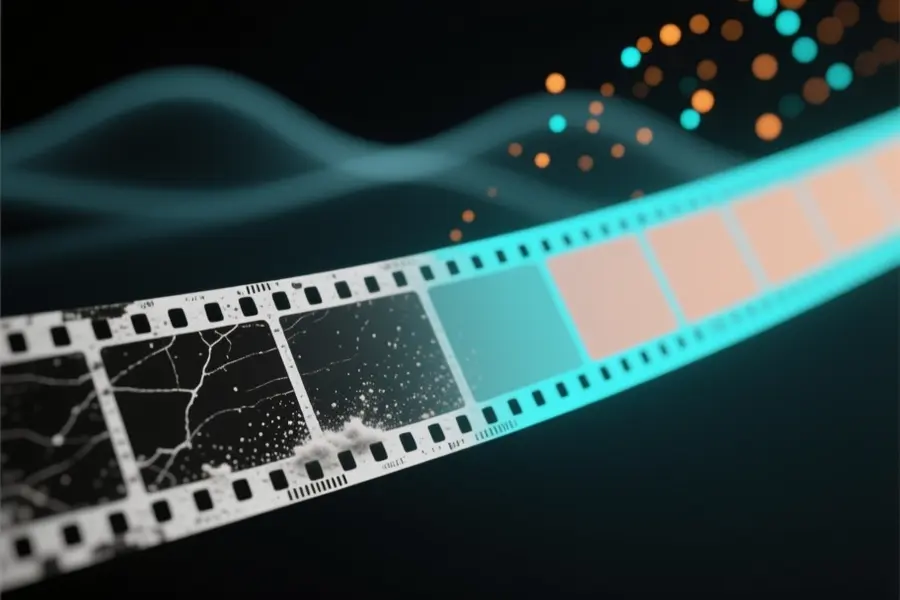
The LTX-2.3-Dearchive-Lora is a LoRA adapter for the LTX-2.3 video model that transforms real archive footage into footage that looks like it was shot recently. It learned to undo many common forms of degradation, turning grainy black-and-white or low-bitrate clips into colored, high-definition video with sharp detail. The process works by conditioning the model on a reference video and a simple caption.
Oumoumad, who also made LTX-2.3-22b-IC-LoRA-Outpaint created this in-context LoRA by building a training pipeline that realistically corrupts clean video, simulating the exact compression, blur, and color loss found in old broadcasts and web rips. Rather than relying only on synthetic test patterns, the adapter was validated on actual archive uploads like mid‑20th‑century interview recordings and silent‑era film clips. This targeted approach aims to give local users a practical restoration tool without any cloud dependency.
Features built from real archive data
Key capabilities
- Restores real black-and-white and tinted footage.
- Increases resolution with sharp, modern detail.
- Colors monochrome clips using reference-aware processing.
- Handles compression artifacts from low‑bitrate sources.
- Works on 16:9 video at 1920×1080 resolution.
- Outputs 97‑frame clips at 24 frames per second.
- Includes an example ComfyUI workflow for quick use.
- Keeps all processing local on your own GPU.
This model is for anyone with a capable local GPU who wants to revive old family tapes, historical recordings, or archive research material without uploading files anywhere. Small agencies can use it to improve documentary b‑roll or social media clips while staying offline and protecting source material. Because nothing leaves the user’s machine, it also fits the needs of privacy‑conscious professionals working with sensitive or proprietary footage.
Developer notes and training approach
The corruption pipeline that trained this LoRA mirrors the real‑world chain of resolution loss, tonal shifts, and multi‑generation h264 re‑encoding found in old YouTube uploads. A key deliberate choice is that the adapter does not outpaint or change aspect ratio—it only works within the original 16:9 frame at matched dimensions. The training used 53 source clips turned into 159 corrupted pairs and ran the Prodigy optimizer with bf16 precision and int8‑quanto for efficient local fine‑tuning.
"Tested on actual archive footage, not just synthetic equivalents." — Source: Hugging Face
Project Links