


Openmandel Lets AI Models Paint Precise Fractal Worlds
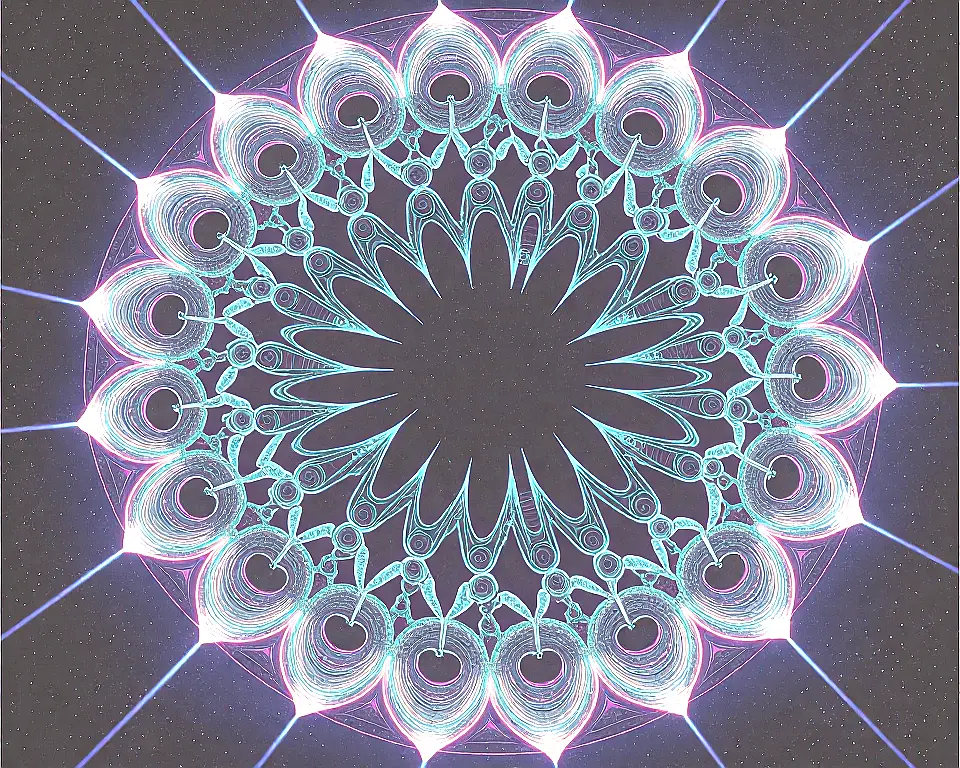
Tapping into the mathematical beauty of fractals, Openmandel is a new tool that lets AI models generate and explore detailed Mandelbrot images on command. It functions as an MCP server, bridging the gap between a local language model and deterministic image-rendering tools. The project gives AI assistants a reliable way to produce precise, high-quality fractal art without guesswork.
Developer Anhad Lamba built this tool as a weekend project to test how well a large language model could handle the sensitivity of fractal geometry. He created a system of presets and inspection tools to stop models from producing garbled results due to slightly incorrect viewport or iteration settings. The primary goal is to make exploring mathematical landscapes as deterministic and reliable as possible for a locally running AI.
Built for precise AI-driven art
Core toolkit for models
- Render deterministic Mandelbrot images from explicit parameters.
- Inspect viewport bounds and cost before rendering.
- Generate variations with slight perturbations automatically.
- Browse known region presets like Seahorse Valley.
- Select from curated color palettes with style guidance.
- Create a static HTML gallery from saved images.
- Define custom output directories for your files.
- Runs fully offline with no telemetry or network access.
This server is aimed at local AI users who want to pair their models with creative, visual output. A privacy-conscious professional can keep everything running offline on a consumer GPU, generating complex art for client mockups or personal projects. The tool handles the tricky math of fractal rendering, so the user only needs to describe the desired image in plain language.
A lesson in fractal sensitivity
The developer quickly observed that fractal rendering is unforgiving with small errors. Even a slightly wrong iteration count produces a useless image, which is why the tool forces the AI to inspect a viewport first before committing to a final render. This creates a feedback loop that makes the output much more consistent than a simple one-shot generation attempt.
"One thing I learned pretty quickly is that fractal rendering is surprisingly sensitive. If the viewport or iteration count is slightly off, the output is usually garbage." — Source: Reddit
Project Links