

Flux-2-Klein-9B-Schematic-Lora Morphs CV Tasks Into Image Edits
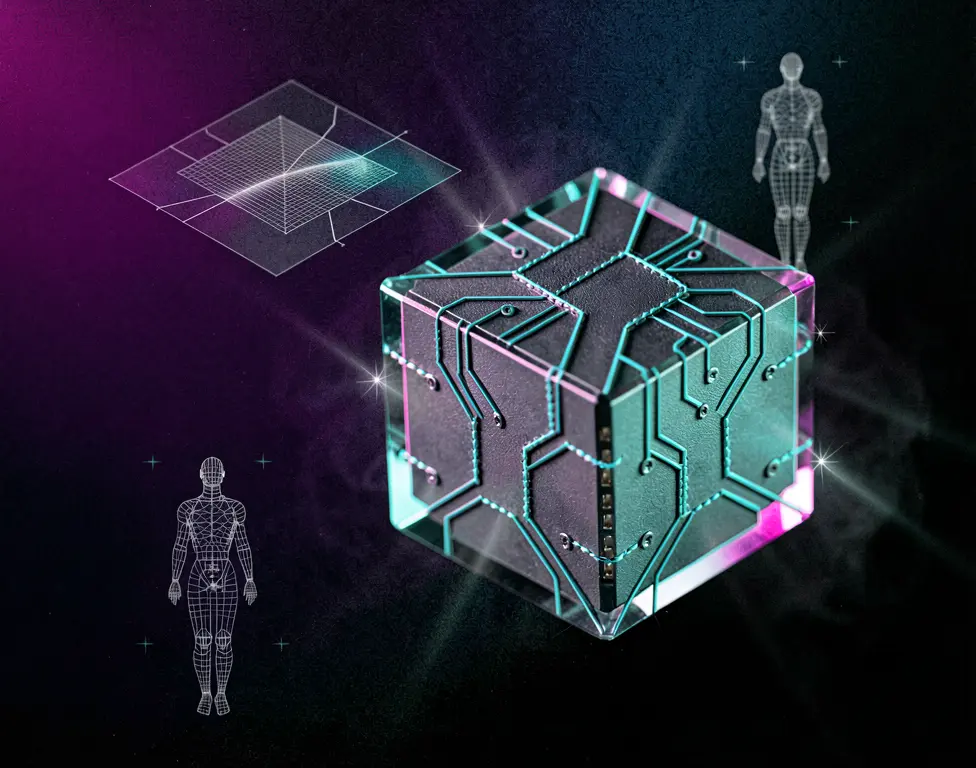
The Flux-2-Klein-9B-Schematic-Lora release offers a set of six LoRA adapters that reframe common computer vision tasks as simple image-editing jobs. Each adapter produces a schematic RGB output—like a depth map or pose skeleton—directly from the FLUX.2 Klein 9B base model when given a short instruction prompt. The approach borrows the idea that tasks such as depth estimation and segmentation can be handled in the same way as style transfers or object removal.
Developer Nomadoor who also made ComfyUI-Panorama-Stickers, trained these small, task-specific LoRAs to see if a local model could replicate a technique recently explored by larger research projects. Inspired by the idea that CV outputs are just another form of image editing, the creator built a compact 1,920-image dataset covering six different schematic visualizations. All training was done on consumer hardware, keeping the experiment accessible to independent researchers and serious hobbyists.
Computer vision tasks reimagined as image editing
Task-specific LoRA capabilities
- Relative depth map generation from input images.
- Surface normal map output for 3D direction.
- Body pose skeleton detection for visible people.
- Full pose map including hands and face.
- Binary segmentation masks for a described target.
- Amodal segmentation that guesses hidden object parts.
These adapters are for tinkerers and local-AI enthusiasts who want to test schematic vision outputs without uploading images to cloud services. Users can run the LoRAs in a ComfyUI workflow alongside the FLUX.2 Klein base model, keeping all processing on their own machines. Because the quality is still experimental, the tool serves best as a proof-of-concept or a building block for further fine-tuning, not as a drop-in replacement for mature preprocessors.
Project notes and what to expect
The developer is upfront that this release is an early experiment with limited training budget and time. Depth and normal maps show reasonable results, while pose estimation often breaks in fine details, and segmentation struggles with ambiguous prompts or multiple similar objects. Amodal segmentation—trying to predict hidden portions of an object—is especially fragile but demonstrates an intriguing direction for future work.
"The quality is not production-ready, and these LoRAs are not intended to replace dedicated CV models." — Source: Hugging Face
Project Links